Dr. Tate
Dr. Tate is a conceptual UX and XR healthcare design project that addresses children’s dental anxiety by combining research-driven insights with immersive, child-friendly experiences across the dental journey.
Timeline
May - Jun, 2024
Category
Conceptual design
UX Design
VR in Healthcare
Role
Design Strategy Lead
Team
Zheng Cao (Me)
Nilu Wu
Jasmine Sun
Overview
Dr. Tate is a conceptual UX and XR healthcare design project focused on reducing dental anxiety among children aged 12–16 undergoing orthodontic treatment.
Informed by interviews with dental professionals, on-site observations, and user-centered research methods, the project identifies key anxiety triggers. The final design proposes an integrated experience combining a mobile app, immersive XR interactions, and a child-friendly clinical environment to support emotional comfort.
Recognition: Nominated by UX Design Award 2024
Problem
Dental anxiety and phobia are fear, anxiety, or stress associated with a dental setting. Being scared to visit the dentist can delay or avoid dental treatment.
Over 75% of children experience significant anxiety and fear when visiting the dentist.
This anxiety often leads to resistance, avoidance of dental care, and long-term negative impacts on oral health. There is a need for a more empathetic, child-centered dental experience that helps children understand procedures, feel emotionally supported, and regain a sense of agency throughout their dental journey.
How Might We…
How might we reduce children’s (12-16 years old) dental anxiety by creating a supportive, engaging experience that helps them better understand dental procedures and feel more comfortable and in control throughout their dental visits?
Research
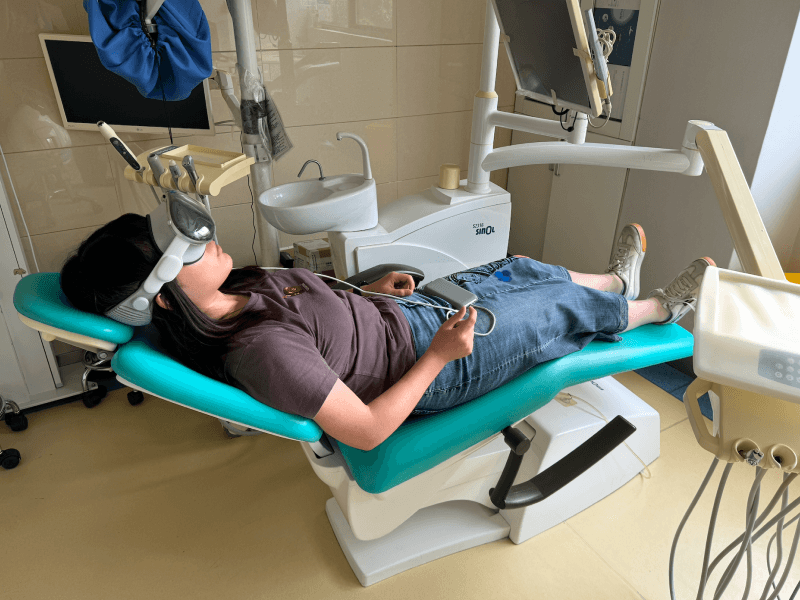
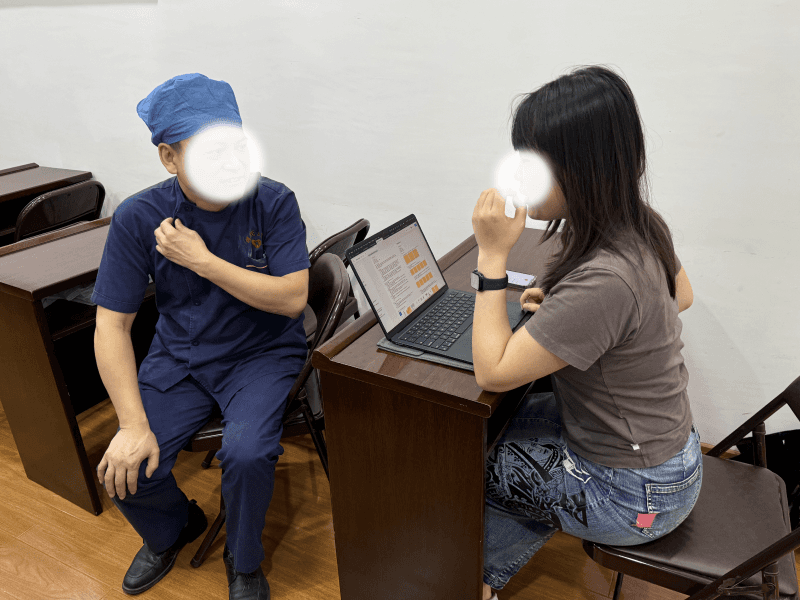
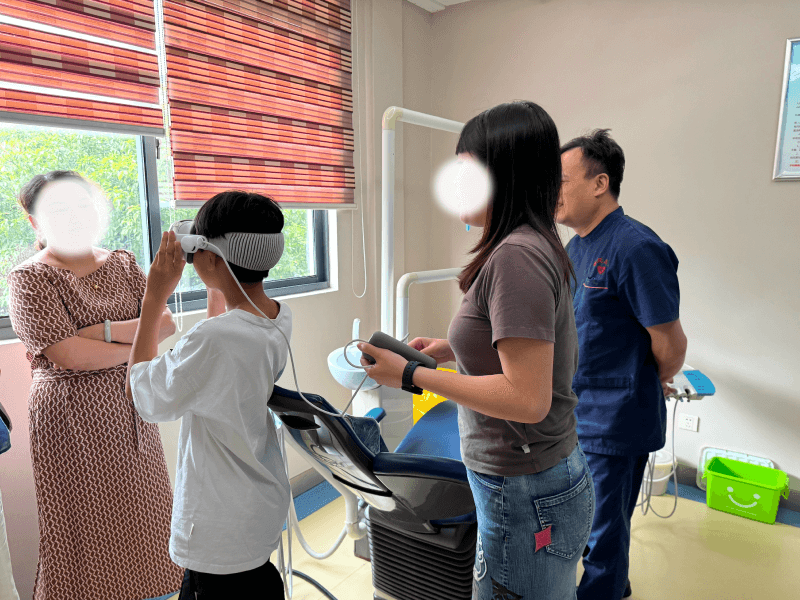
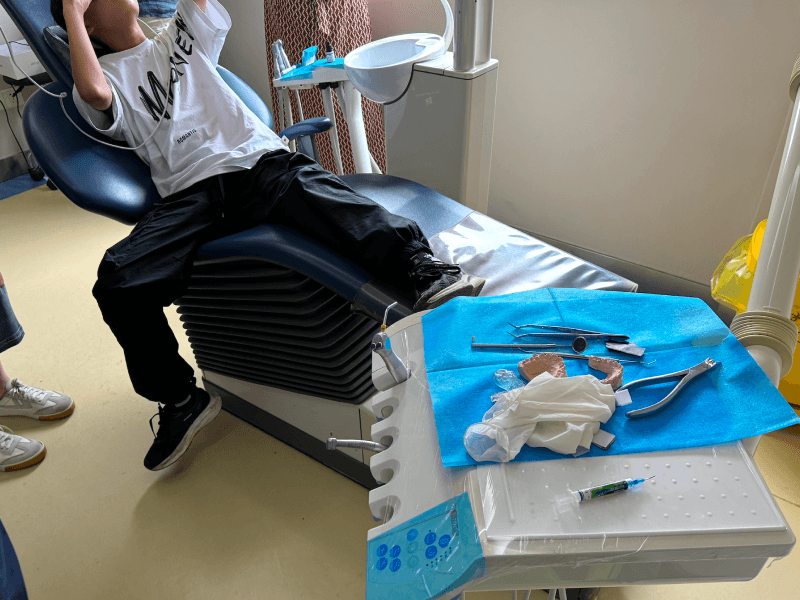
Interview:
To better understand the causes of dental anxiety among children and identify opportunities for intervention, we collaborated with Dr.Fu’s Dental Center and conducted interview pediatric dental professionals
The interviews focused on common anxiety triggers, communication challenges between dentists and young patients, and existing strategies used to help children feel more comfortable during orthodontic treatment.
Observation:
An on-site observation was conducted to examine children’s behaviors and emotional responses throughout their visits. The observations showed that anxiety often increased in waiting rooms and during treatment preparation, especially when children encountered unfamiliar tools and sounds. These insights emphasized the importance of environmental design and non-verbal support in creating a calmer, more reassuring dental experience.
Key Findings
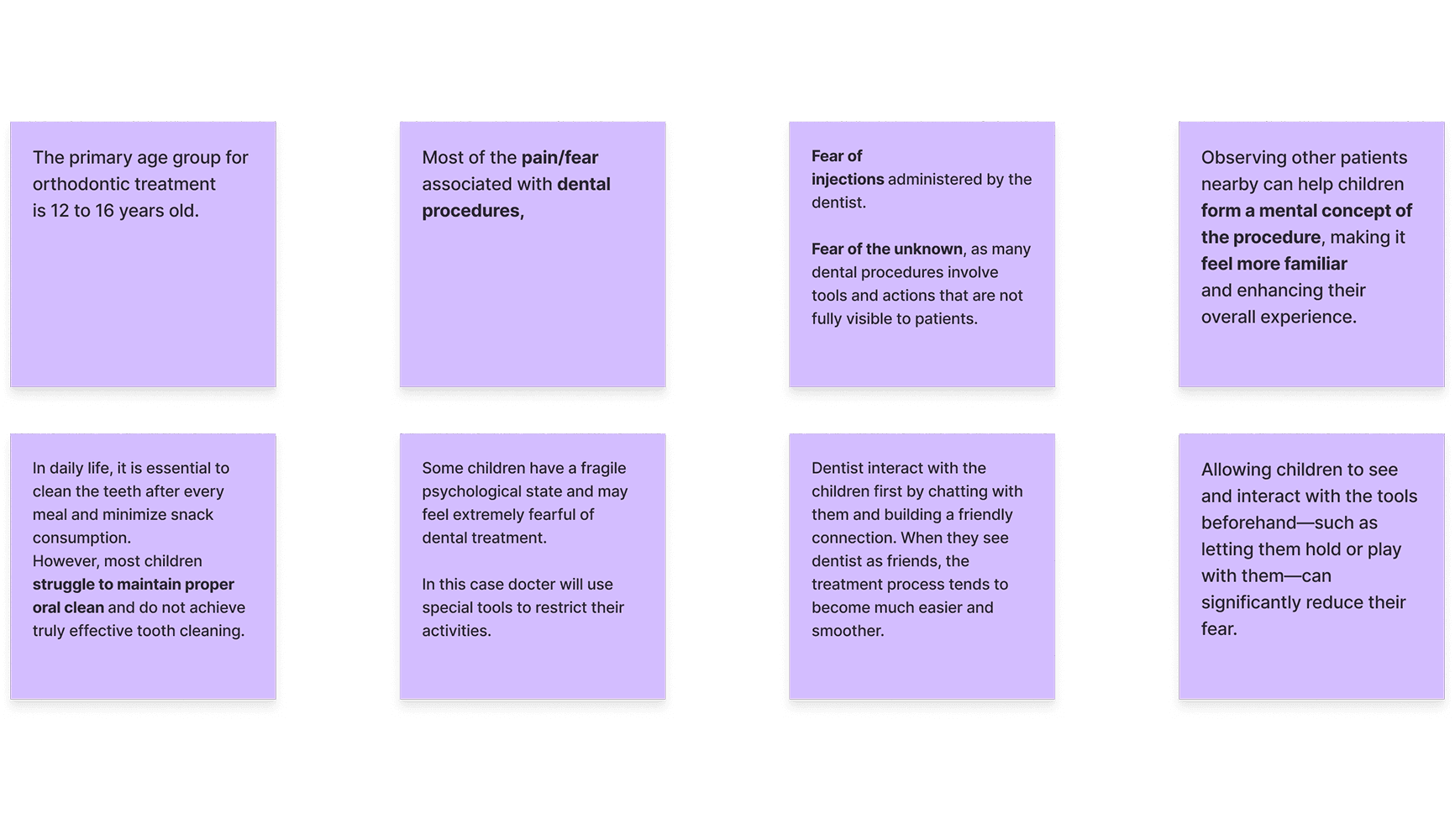
Research revealed that children’s dental anxiety is primarily driven by fear of the unknown, anticipation of pain, and a lack of control during treatment. Anxiety often peaks before procedures begin, when children have a limited understanding of what will happen and little opportunity to mentally prepare.
Affinity Mapping
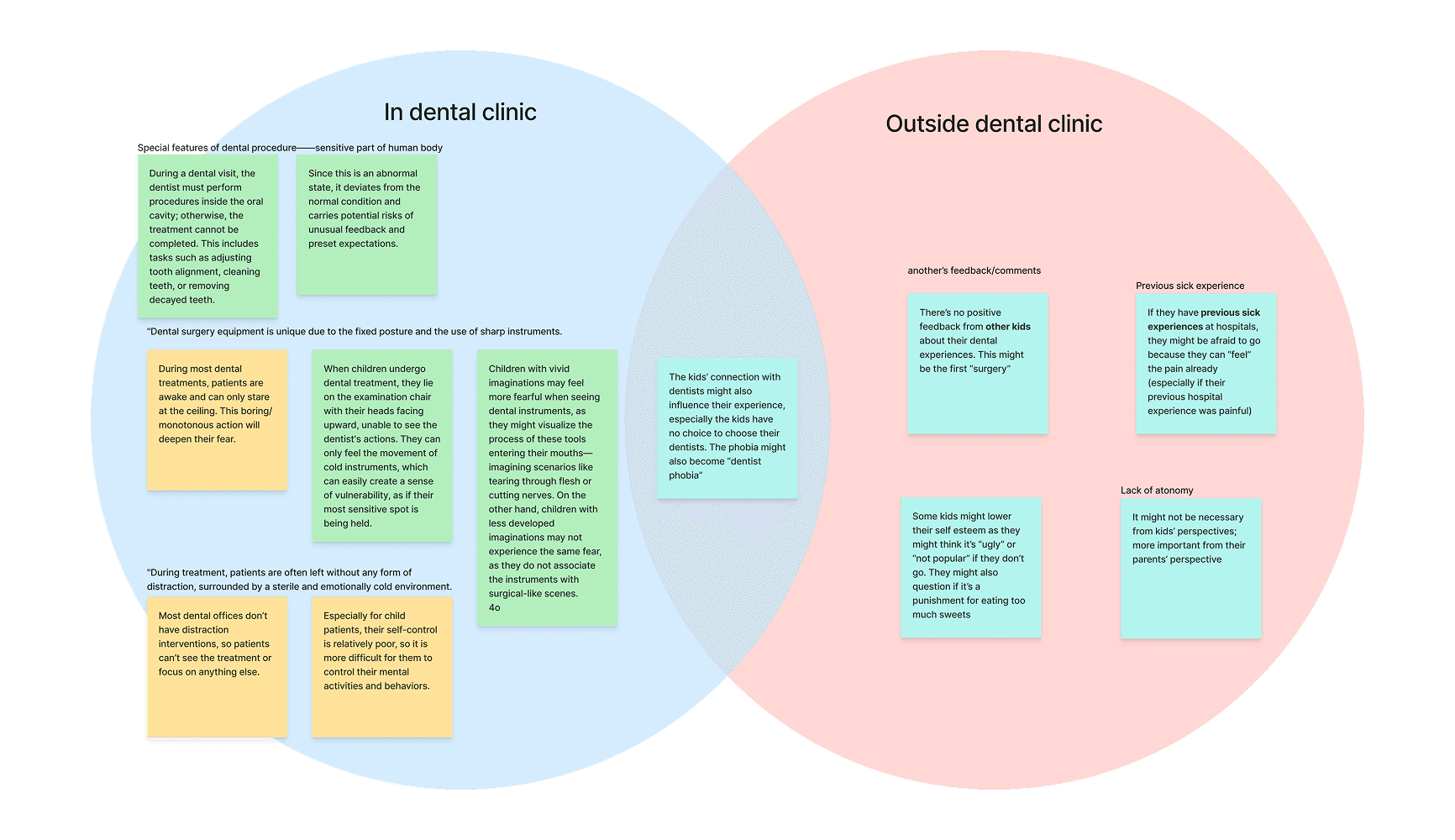
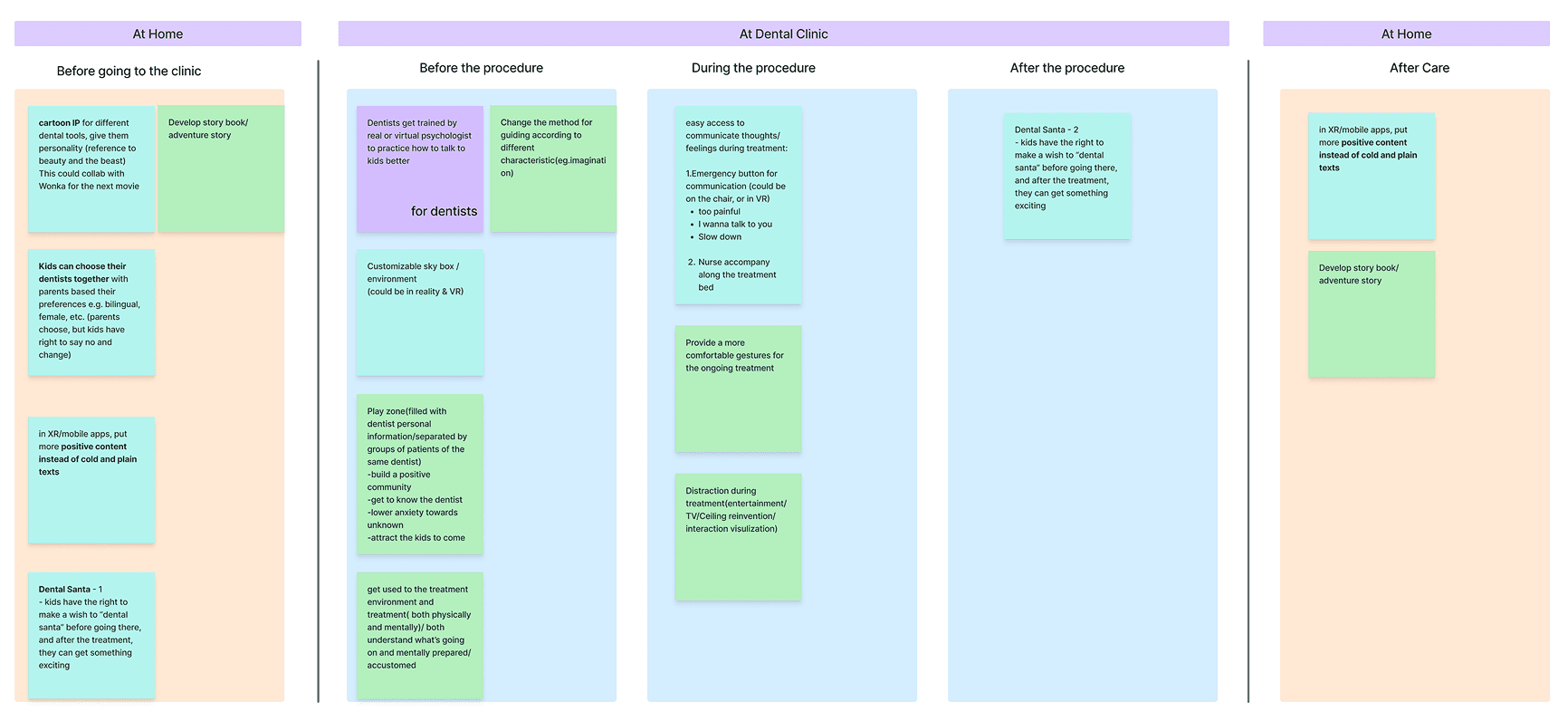
Interview and observation data were synthesized through affinity mapping to identify emotion patterns in children’s dental anxiety. Key themes included fear of pain, unfamiliar environments and tools, lack of control, and limited understanding of procedures.
Grouping these insights into In Dental Clinic and Out of Dental Clinic helped clarify design opportunities focused on preparation, emotional reassurance, and after care across the dental journey.
Interpretation
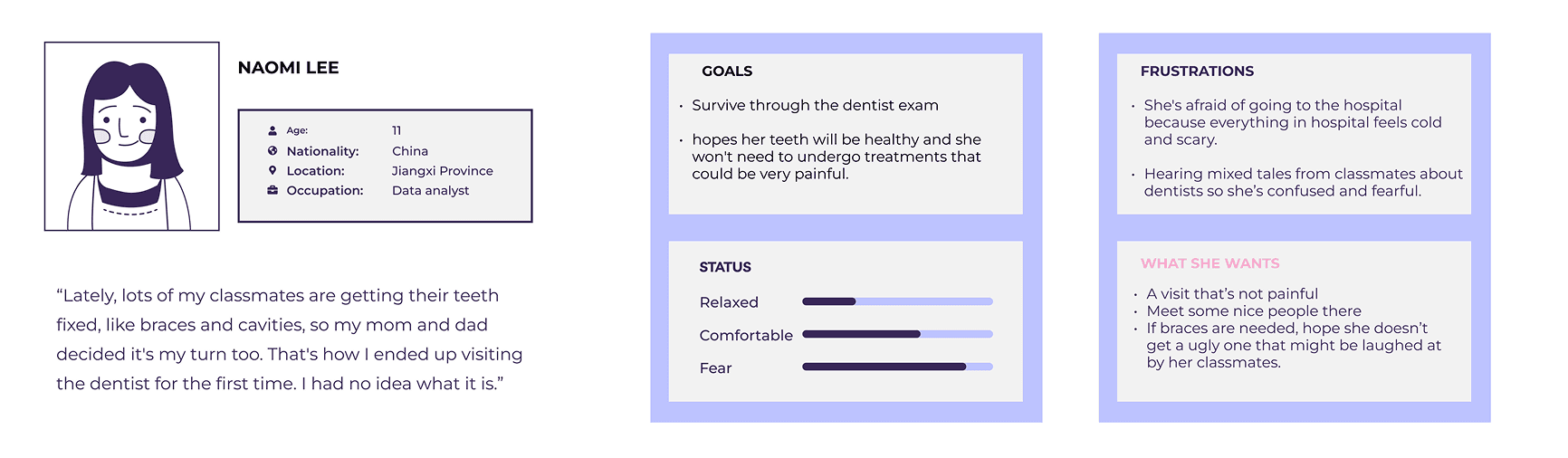
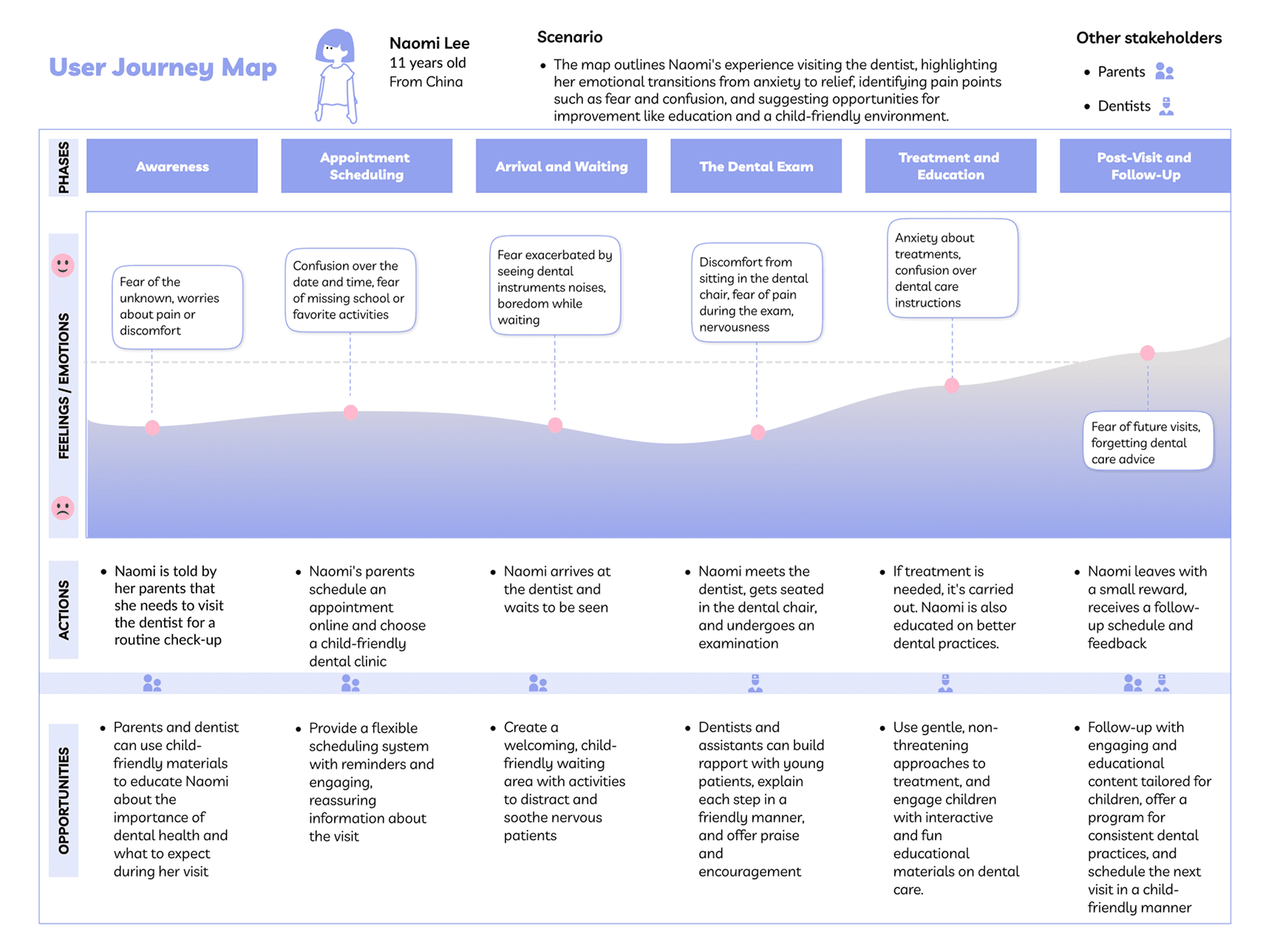
Using personas and user journey maps, we translated research insights into a holistic understanding of children’s emotional needs throughout the dental experience. These tools revealed key anxiety before and during treatment, highlighting moments where clearer communication, preparation, and a sense of control are most critical.
The interpretation guided the design toward targeted interventions across multiple touchpoints, from pre-visit education to in-clinic emotional support.
Ideation
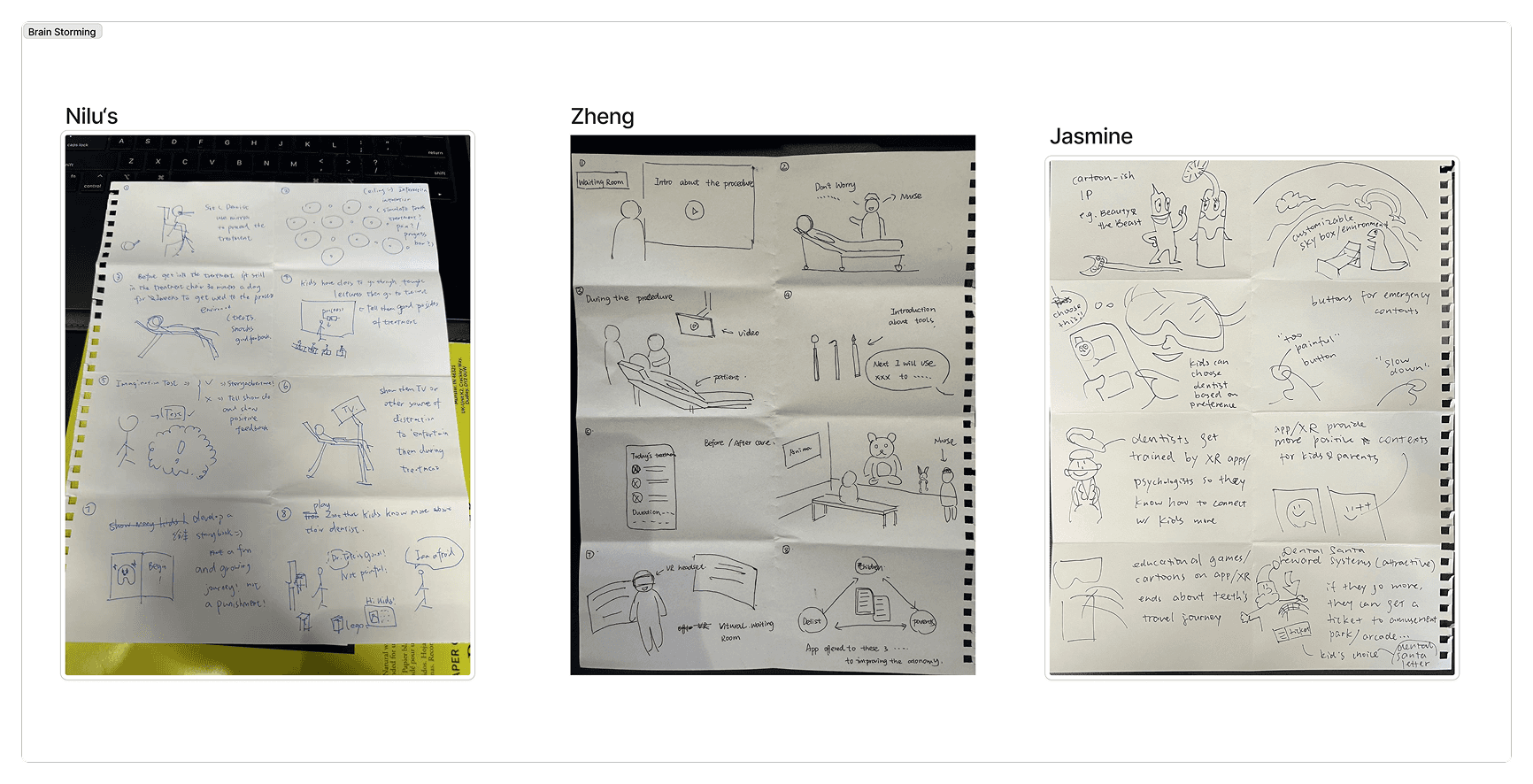
Based on insights from interviews, observations, and journey mapping, we explored design opportunities across the dental experience: before, during, and after treatment.
Solution
Ideas were clustered around three key directions:
Digital platform for pre-visit education, communication, and aftercare;
Child-friendly physical environment that reduces stress through interaction and distraction;
XR experiences that gamify treatment, visualize procedures, and simulate the clinical environment to build familiarity.
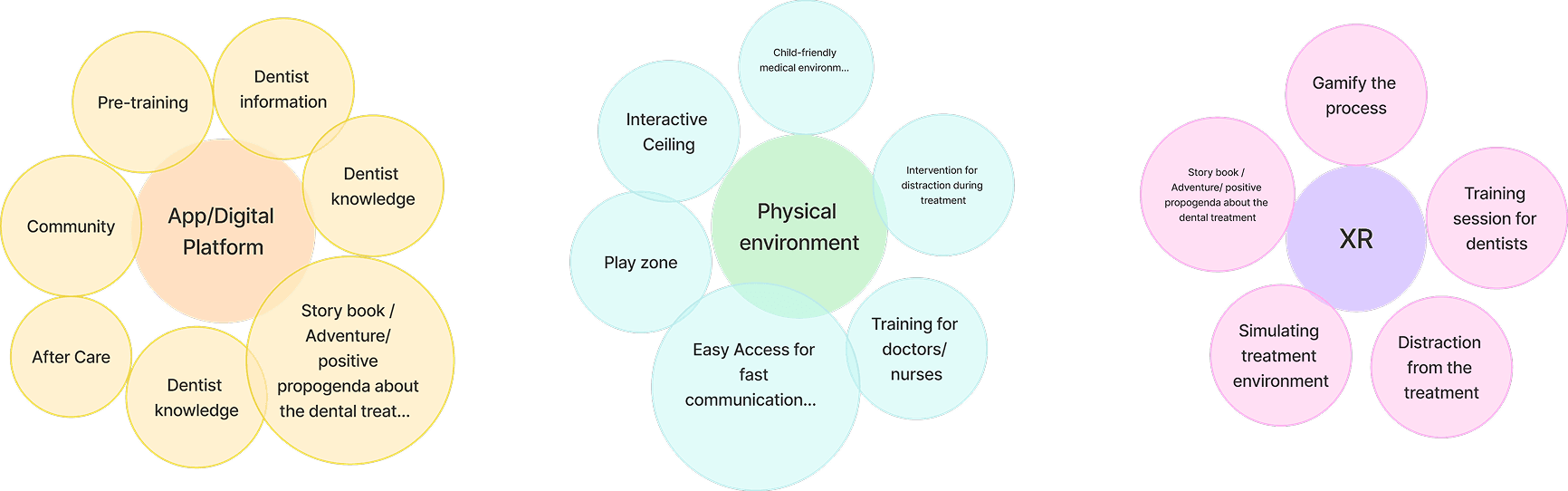
These explorations led to a cohesive concept that combines gamification, treatment visualization, and immersive virtual spaces. By turning dental care into an interactive and understandable experience, the ideation phase focused on helping children feel prepared, supported, and more in control throughout their orthodontic journey.
Design
Dr.Tate offers a platform that creates a joyful atmosphere from the moment children enter the clinic.
After checking the basic information, the child onboards using the mobile app with the help of parents and a clinic assistant. Since the dentist already had the kid’s profile, the app only requires a few pieces of information to confirm.
When the child lies on the dental chair, the dentist will perform the basic Tell-Show-Do steps and guide the child to put on VR glasses to begin the treatment.
In the virtual space, the child’s teeth condition and treatment progress are visualized, and it also introduces information about the dentist to help the child feel relaxed and trust them. A progress bar in virtual space also indicates the current stage of the treatment. Fun animations are used to illustrate process procedures.
While waiting, the parents can access the app to view their kids' current progress of treatment and schedule information. After getting home, the kids would get a notification about their progress update, and they could see the detailed progress stages that they are in with the up-to-date image of their teeth.
Explore more

Virtual Sapiens Web Redesign
This is a web design and rebranding project, collaborated with Virtual Sapiens, a B2B AI-powered communication coaching platform. By developing a cohesive visual identity and restructuring the landing experience, the new design strengthens credibility, improves narrative clarity, and better aligns the product with the expectations of B2B professionals.
Read More

Misty Moment
Merges photo-video art with copywriting, capturing ephemeral blurred floral motion in a sensory-driven experience.
Read More